Verily, verily it is written: a laugh a day keeps the doctor away! :-)
Faith and toys
Atheism
There is no toy maker.
Polytheism
There are many toy makers.
Evolutionism
The toys made themselves.
Capitalism
He who dies with the most toys, wins.
Communism
Everyone gets the same number of toys, and whoever is caught selling his toys will go straight to hell.
Buddhism
He who dies with no toys, wins.
Confucianism
Once a toy is dipped in the water, it is no longer dry.
Branch Davidians
He who dies playing with the biggest toys, wins.
Hinduism
He who plays with bags of plastic farm animals, loses.
Jehovah’s Witnesses
He who sells the most toys door-to-door, wins.
Mormonism
Every boy can have as many toys as he wants.
Muslim
He who plays only with soldier toys, wins.
Satanism
He who plays with fire, wins.
Judaism
He who plays without following the rules, loses.
Anglican
They were our toys first.
Greek Orthodox
No, they were OURS first.
7th Day Adventist
He who plays with his toys on Saturday, loses.
Baptist
Once played, always played.
Catholicism
He who denies himself the most toys, wins.
Pentecostalism
He whose toys can talk, wins.
Additional:
Gnosticism
He who has secret toy knowledge wins.
Scientology
Toys were made by aliens!
Agnosticism
Do toys really exist?
Nihilism
Live as if the toys have no tomorrow!
Rastafarian
Rasta mon! Nice toy, can I make a bong out of it?
Grin.
Thanks, Sigmund, Carl and Alfred, for the great post.
Smile and have a great day everyone! There's a point to the humor somewhere, if I could just find it, lol. :-)
p.s. if I offended anyone in above said categories, please do not take your toys and go home! I really do value your toy thoughts, so smile!
Showing posts with label parable. Show all posts
Showing posts with label parable. Show all posts
Friday, July 27, 2007

Wednesday, July 19, 2006
The deadly racism of demanding Jewish restraint

Birkenau. The tracks which Ahmadinejad denies lead to the ovens which Ahmadinejad denies. But surely this all happened because of Jewish lack of restraint!
A true story, a parable
by Loy Mershimer
The elderly Jew looked out over the river, and silently laughed for joy. The sunlight ran from shore to shore, sparkling like diamonds on the water, calling forth praise. It was a good day, a day for giving thanks... A ferry pulled to the shore, and he stepped up to board, smiling slightly as the gentle breeze tufted his wise, grey beard. The wisdom of Torah lighted his face as his eyes blessed creation and creatures alike: “Praise you, G-d, for this good day!” “Praise you for these people here, that they could enjoy this scene with me!”
The beauty of his thoughts was suddenly broken by a strident voice: “A fig, I say!” “A fig for the Jew!” Through the clustered passengers strode a strongly built man, athletic and proud: “A fig for the Jew!” The big stranger ruffled the kippah of the elderly Jew and turned to play the crowd. “What do we have here?” he asked rhetorically, gesturing grandly. “We have ourselves a bona fide Jew!” “Rub its head three times for good luck; yank its beard and money will flow!”
Several of the clustered people chuckled; others turned away and pretended not to see…
“…Yank its beard and money will flow!” the rowdy strong man continued his litany, as he turned again to his victim. “Isn’t that right, Mr. Jew?” “Yank your beard and money will flow?” The elderly Jew replied with a look of trepidation: “What do you want from me?” he asked. Visions of past abuse danced in his soul…his head bowed.
“What will you pay me to stop yanking your beard, old man!” sneered the athlete. With that he yanked the man’s beard, and laughed to the crowd. “It’s a bank!” he cried. “Yank the string and money will clink out!” “Where’s the payment, old man?” Again, he yanked. And again.
Then, instinctively, impulsively, he knew not how it happened…something steeled in the soul of the old man…and as the strong bully grasped his beard for another yank, the old man bit down on his hand.
“Aaaaahhhh!” shouted the athletic bully. His proud words quickly turned to pain. “The Jew bit me!” he cried. His pride seamlessly turned to self-righteous indignation: “This Jew assaulted me for no reason!” He clutched his wounded finger and began calling for the police. “You saw him bite me!” he cried to a bystander. “Yes, I saw,” replied the man.
“Here now!” said the police officer. “What’s all this racket?”
“The Jew!” blustered the wounded bully. “This Jew attacked me for no reason, and bit my finger!” “You see the blood!” “This Jew wanted my blood!” “I was just having a little fun with him, and he attacked me!”
“Come with me,” said the officer, as he clasped the shoulder of the grey-bearded Jew.
“But, sir!” said the old man, tears in his eyes. “He was pulling my beard and threatening me! He was hurting me!” “Look, the hair pulled out by the roots, the blood on my face!”
“Tell that to the judge,” said the officer. “Come along.” “You’re under arrest for assault and battery.”
Later, the elderly Jew stood before the district judge, and told his story as true as it happened before G-d.
The pious judge listened to the story, hands about his chin. Then he reached for his gavel and clanked it down with all the weight of law-abiding authority: “A fine for the Jew!” he said. “Enough to cover damages and pain and suffering for this fine athlete!”
The gathered audience nodded their heads, tongues clucking in approval of the wise judge’s decision.
Then the judge turned to give a final lecture to the old Jew: “What’s the matter, old man?” he said, false moral authority creasing his portly brow. “Couldn’t you practice a little restraint?”
“Couldn’t you practice a little restraint?”
In this court of supposed justice echoed the most unjust words an ear could hear…words dripping with moral authority, yet so fatally wrong: of course it was the Jew’s fault, the words shouted: He didn’t practice restraint!
A true story, yet ongoing
It would be bad enough if this event only happened once, and it did happen…but the travesty is that its injustice continues. It happens often on an international scale, as a Jewish nation struggles for life and peace.
Terror? Rockets? Missiles? Kidnapping? Suicide bombs? Beard-pulling? Destruction? Such is a daily occurrence for a lonely nation, surrounded on the dock by a clustered crowd, some of whom add their voices in derision, others who turn away in silence: it’s only a Jew being terrorized, after all!
And so the nation gives up her land, land made to blossom as a garden, arid land turned into lucrative flower, and only asks for peace in return. But in return, what? More bombs, more terror, more injustice. “We’ll yank your beard, Mr. Jew. Where’s the money?” “We have the strong man behind us, you know!”
They didn’t want the Jew’s land after all; they only wanted the Jew’s destruction…
And yet the clustered crowd blames the Jew!
Selah.
The beard of the Jew is pulled again and again. Blood is running down his cheeks; his right to exist is denied, and actions for peace are mocked. Yet if he moves against the hand of his oppressor, it is his fault! The arrest must be made; this is peace, after all: the removal or submission of the Jew!
And if the Jew is destroyed, it’s all the same, surely!
After all, he didn’t practice restraint, you know…
Friday, November 04, 2005
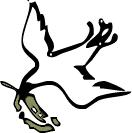
A parable of the wood dove
Behold the birds of the air
by Soren Kierkegaard
Once upon a time there was a wood dove. It had its nest in the fearsome forest, where wonder and apprehension dwelt together, among the erect, lonely trees. But nearby, where the smoke rises up from the farmer’s house, lived some tame doves. The wood dove would often meet a pair of these. He would sit on a branch that stretched out over the farmyard, not far from the two tame doves on the ridge of the roof. One day they were talking together about how things were going and about making a living. The wood dove said, “Up until now I have made my living by letting each day have its own troubles, and in that way I get through life just fine.” The tame dove, not without preening itself, answered: “No, we manage differently; with us, that is with the rich farmer with whom we live, our future is secure. At harvest time, my mate and I sit up on the roof and watch. The farmer brings in so many loads of corn that I know we are secure for a very long time. We two are well provided for and have our guaranteed security.”
When the wood dove returned home he pondered the matter. It occurred to him that it must be a great comfort to know that one’s living was secure for a long time, and what a wretched thing it was to always live in uncertainty. “It would be best,” he told himself, “to gather a great stockpile and store it here or there in some safe place.”
The next morning the wood dove woke earlier than usual.
He got to work right away and was so busy gathering and storing that he scarcely had time to eat. But as fate seemed to hang over him, every time he had collected a little supply and hidden it away, when he came to look for it, it was gone! Meanwhile there was no actual change about making a living. He found his food every day as before. And yet a great change had taken place. He did not suffer actual want, but he had acquired the anticipation of need in the future. His peace of mind was lost.
He had become anxious about the necessities of life.
From now on, the wood dove began to worry. His feathers lost their glint of color, his flight lost buoyancy. He was no longer joyful; indeed, he was almost envious of the rich, tame doves. He found his food each day, ate his fill, and yet he was not satisfied. In worrying about his needs he had trapped himself in a snare in which no birdcatcher could have trapped him, trapped as only a free creature can trap himself. “This securing of the future is constantly on my mind,” he said. “Oh why am I a poor wood dove and not one of those rich ones?”
He saw plainly that anxiety was taking its toll on him, and so he spoke seriously to himself, yet not so seriously that he could drive away the worry from his mind and set his heart at rest. No, he only spoke in such a way that he convinced himself that his care was justified. “I am not asking anything unreasonable or impossible,” he said. “I do not ask to become like the wealthy farmer, but only like one of the rich doves.”
Finally, he contrived a scheme. One day he flew over and sat between the tame doves on the ridge of the farmer’s roof. He noticed a place where they flew in, so he flew in too, because surely the storeroom had to be there. But when the farmer came home in the evening and shut the dovecote, he discovered the strange dove. He immediately put it into a little box by itself until the next day, when it was killed – and released from its worries about the necessities of life! Alas, the worried wood dove had not only trapped himself in worry but also in the dovecote – to its death!
The wood dove is like us silly human beings. When a person is content with the dignity of being human, then he understands that his heavenly Father feeds him. This he learns from the birds of the air. He does not live like the tame birds in the house of the wealthy farmer, but in the house of him who is richer than everyone, for heaven and earth are the house and possession of God, and humankind is his guest.
A person must be content to be as he is; a dependent being, as little capable of sustaining himself as of creating himself. If we choose to forget God and look after our own sustenance, then we are overcome with anxiety. It is certainly praiseworthy and pleasing to God when a person works for his food. But if he forgets God, and thinks that he himself is supporting himself, then he becomes burdened with the necessities of life. Let us not foolishly and small-mindedly say that the wealthy are spared this anxiety, while the poor are not. On the contrary, only he is spared who is content with being human and understands that his heavenly Father feeds him. And this is as possible for the wealthy as is it for the poor.
Worry about making a living, or not making a living, is a snare. In actuality, it is the snare. No external power, no actual circumstance, can trap a person. If a person chooses to be his own providence, then he will go quite ingenuously into his own trap, the wealthy as well as the poor. If he wants to entrench himself in his own plot of ground that is not under God’s care, then he is living, though he does not acknowledge it, in a prison. When the farmer shut the door on the wood dove, the wood dove believed himself to be safe, when in fact he was caught. Or to put it another way, he was shut out from the care of Providence and trapped in a life of anxiety. In a spiritual sense he made himself a captive – trapped himself unto death.
Prayer
Lord, let me be like a wood dove that trusts you, living every day, open to your rain and sun, drinking in your loyal sustenance without fault. And let me live in this trust, open to you as a child that loves and traces the face of Abba in the clouds, seeing you in every sunrise and sunset, in daily details and brilliant evening stars above! In the name of Jesus the Christ, and in your Spirit, I pray...
Amen.
___________________
Soren Kierkegaard, Provocations: Spiritual Writings of Kierkegaard, Compiled and Edited by Charles E. Moore. Reprinted from www.bruderhof.com. Copyright 2002 by The Bruderhof Foundation, Inc. Used with permission.
by Soren Kierkegaard
Once upon a time there was a wood dove. It had its nest in the fearsome forest, where wonder and apprehension dwelt together, among the erect, lonely trees. But nearby, where the smoke rises up from the farmer’s house, lived some tame doves. The wood dove would often meet a pair of these. He would sit on a branch that stretched out over the farmyard, not far from the two tame doves on the ridge of the roof. One day they were talking together about how things were going and about making a living. The wood dove said, “Up until now I have made my living by letting each day have its own troubles, and in that way I get through life just fine.” The tame dove, not without preening itself, answered: “No, we manage differently; with us, that is with the rich farmer with whom we live, our future is secure. At harvest time, my mate and I sit up on the roof and watch. The farmer brings in so many loads of corn that I know we are secure for a very long time. We two are well provided for and have our guaranteed security.”
When the wood dove returned home he pondered the matter. It occurred to him that it must be a great comfort to know that one’s living was secure for a long time, and what a wretched thing it was to always live in uncertainty. “It would be best,” he told himself, “to gather a great stockpile and store it here or there in some safe place.”
The next morning the wood dove woke earlier than usual.
He got to work right away and was so busy gathering and storing that he scarcely had time to eat. But as fate seemed to hang over him, every time he had collected a little supply and hidden it away, when he came to look for it, it was gone! Meanwhile there was no actual change about making a living. He found his food every day as before. And yet a great change had taken place. He did not suffer actual want, but he had acquired the anticipation of need in the future. His peace of mind was lost.
He had become anxious about the necessities of life.
From now on, the wood dove began to worry. His feathers lost their glint of color, his flight lost buoyancy. He was no longer joyful; indeed, he was almost envious of the rich, tame doves. He found his food each day, ate his fill, and yet he was not satisfied. In worrying about his needs he had trapped himself in a snare in which no birdcatcher could have trapped him, trapped as only a free creature can trap himself. “This securing of the future is constantly on my mind,” he said. “Oh why am I a poor wood dove and not one of those rich ones?”
He saw plainly that anxiety was taking its toll on him, and so he spoke seriously to himself, yet not so seriously that he could drive away the worry from his mind and set his heart at rest. No, he only spoke in such a way that he convinced himself that his care was justified. “I am not asking anything unreasonable or impossible,” he said. “I do not ask to become like the wealthy farmer, but only like one of the rich doves.”
Finally, he contrived a scheme. One day he flew over and sat between the tame doves on the ridge of the farmer’s roof. He noticed a place where they flew in, so he flew in too, because surely the storeroom had to be there. But when the farmer came home in the evening and shut the dovecote, he discovered the strange dove. He immediately put it into a little box by itself until the next day, when it was killed – and released from its worries about the necessities of life! Alas, the worried wood dove had not only trapped himself in worry but also in the dovecote – to its death!
The wood dove is like us silly human beings. When a person is content with the dignity of being human, then he understands that his heavenly Father feeds him. This he learns from the birds of the air. He does not live like the tame birds in the house of the wealthy farmer, but in the house of him who is richer than everyone, for heaven and earth are the house and possession of God, and humankind is his guest.
A person must be content to be as he is; a dependent being, as little capable of sustaining himself as of creating himself. If we choose to forget God and look after our own sustenance, then we are overcome with anxiety. It is certainly praiseworthy and pleasing to God when a person works for his food. But if he forgets God, and thinks that he himself is supporting himself, then he becomes burdened with the necessities of life. Let us not foolishly and small-mindedly say that the wealthy are spared this anxiety, while the poor are not. On the contrary, only he is spared who is content with being human and understands that his heavenly Father feeds him. And this is as possible for the wealthy as is it for the poor.
Worry about making a living, or not making a living, is a snare. In actuality, it is the snare. No external power, no actual circumstance, can trap a person. If a person chooses to be his own providence, then he will go quite ingenuously into his own trap, the wealthy as well as the poor. If he wants to entrench himself in his own plot of ground that is not under God’s care, then he is living, though he does not acknowledge it, in a prison. When the farmer shut the door on the wood dove, the wood dove believed himself to be safe, when in fact he was caught. Or to put it another way, he was shut out from the care of Providence and trapped in a life of anxiety. In a spiritual sense he made himself a captive – trapped himself unto death.
Prayer
Lord, let me be like a wood dove that trusts you, living every day, open to your rain and sun, drinking in your loyal sustenance without fault. And let me live in this trust, open to you as a child that loves and traces the face of Abba in the clouds, seeing you in every sunrise and sunset, in daily details and brilliant evening stars above! In the name of Jesus the Christ, and in your Spirit, I pray...
Amen.
___________________
Soren Kierkegaard, Provocations: Spiritual Writings of Kierkegaard, Compiled and Edited by Charles E. Moore. Reprinted from www.bruderhof.com. Copyright 2002 by The Bruderhof Foundation, Inc. Used with permission.