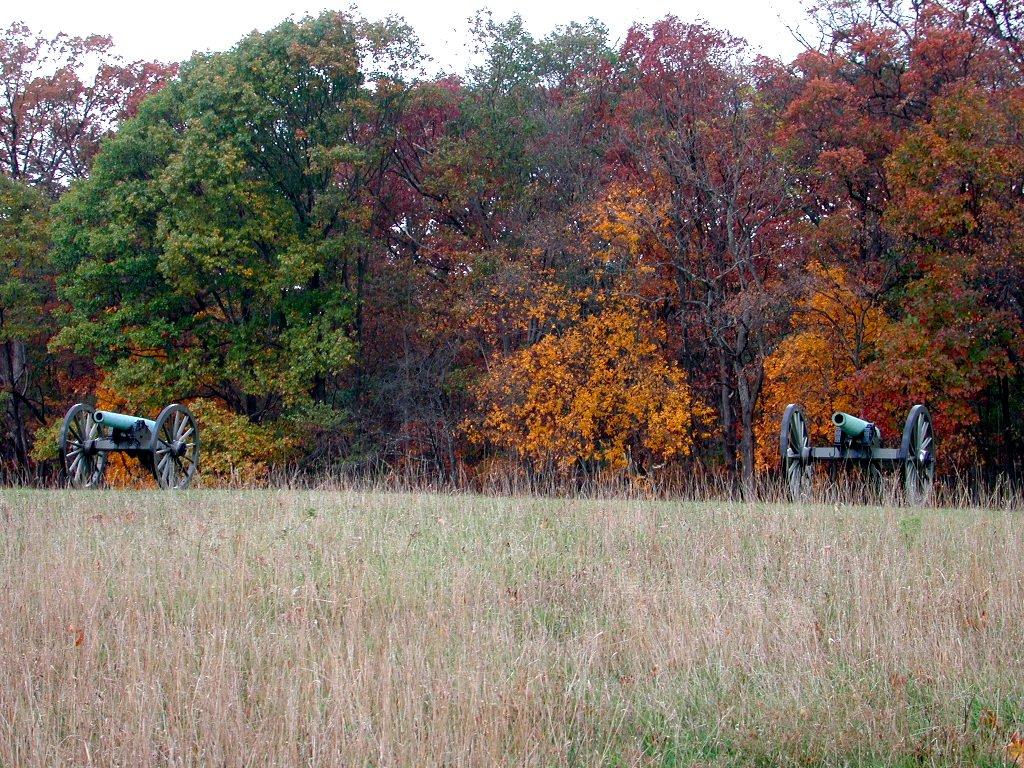
Stones River National Battlefield

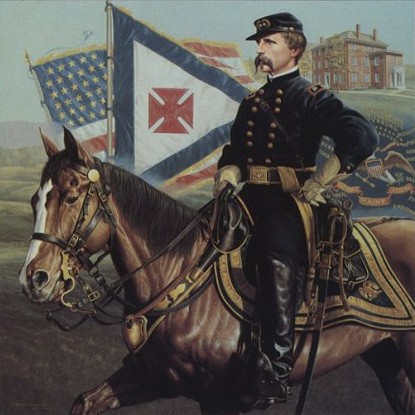
Nightfall brought us to Hanover, Pennsylvania, and to a halt. And it was the evening of the first day of July, 1863. All day we had been marching north from Maryland, searching and pushing out on all roads for the hoped-for collision with [Gen. Robert E.] Lee eagerly, hurriedly, yet cautiously, with skirmishers and flankers out to sound the first challenge, and our main body ready for the call…
Worn and famished we stacked arms in camping order, hoping to bivouac beside them… Some of the forage wagons had now got up, and there was a brief rally at their tail ends for quick justice to be dispensed. But the unregenerate fires had hardly blackened the coffee-dippers, and the hardtack hardly been hammered into working order by the bayonet shanks, when everything was stopped short by whispers of disaster away on the left: the enemy had struck our columns at Gettysburg, and driven it back with terrible loss; [John F.] Reynolds, the commander, had been killed, and the remnant scarcely able to hold on to the hillsides unless rescue came before morning. These were only rumors flitting owl-like, in the gathering shadows. We could not quite believe them, but they deepened our mood.
Suddenly the startling bugle-call from unseen headquarters! “The General!” it rang! “To the march! No moment of delay!”
Word was coming, too. Staff officers dashed from corps, to division, to brigade, to regiment, to battery and the order flew like the hawk, and not the owl. “To Gettysburg!” it said -- a forced march of sixteen miles. But what forced it? And what opposed? Not supper, nor sleep, nor sore feet and aching limbs.
In a moment, the whole corps was in marching order; rest, rations, earth itself forgotten; one thought -- to be first on that Gettysburg road. The iron-faced veterans were transformed to boys. They insisted on starting out with colors flying, so that even the night might know what manner of men were coming to redeem the day.
At a turn of the road a staff officer, with an air of authority, told each colonel as he came riding up, that McClellan was in command again, and riding ahead of us on the road. Then wild cheers rolled from the crowding column into the brooding sky, and the earth shook under the quickened tread. Now from a dark angle of the roadside came a whisper, whether from earthly or unearthly voice one cannot feel quite sure, that the august form of Washington had been seen that afternoon at sunset riding over the Gettysburg hills. Let no one smile at me! I half believed it myself -- so did the powers of the other world draw nigh![1]
Reaching the southern face of Little Round Top, I found Vincent there, with intense poise and look. He said with a voice of awe, as if translating the tables of the eternal law, ‘I place you here! This is the left of the Union line. You understand. You are to hold this ground at all costs!’
Chamberlain said that ‘he understood, but was yet to learn about costs.’ He prepared his men to fight ‘at all costs,’ i.e. to fight to the death, if need be.[2]
Up and down the line, with a last word of encouragement or caution, walks the quiet man, whose calm exterior concealed the fire of the warrior and heart of steel, whose careful dispositions and ready resource, whose unswerving courage and audacious nerve in the last desperate crisis, are to crown himself and his faithful soldiers with...fadeless laurels.[3]
The roar of all this tumult reached us on the left, and heightened the intensity of our resolve. Meanwhile the flanking column worked around to our left and joined with those before us in a fierce assault, which lasted with increasing fury for an intense hour. The two lines met and broke and mingled in the shock. The crush of musketry gave way to cuts and thrusts, grapplings and wrestlings. The edge of conflict swayed to and from, with wild whirlpools and eddies. At times I saw around me more of the enemy than of my own men: gaps opening, swallowing, closing again with sharp convulsive energy; squads of stalwart men who had cut their way through us, disappearing as if translated. All around, strange, mingled roar-shouts of defiance, rally, and desperation; and underneath, murmured entreaty and stifled moans; gasping prayers, snatches of Sabbath song, whispers of loved names; everywhere men torn and broken, staggering, creeping quivering on the earth, and dead faces with strangely fixed eyes staring stark into the sky. Things which cannot be told -- nor dreamed.
How men held on, each one knows, not I. But manhood commands admiration.
There was one fine young fellow, who had been cut down early in the fight with a ghastly wound across his forehead, and who I had thought might possibly be saved with prompt attention. So I had sent him back to our little field hospital, at least to die in peace. Within a half-hour, in a desperate rally I saw that noble youth amidst the rolling smoke as an apparition from the dead, with bloody bandage for the only covering of his head, in the thick of the fight, high-borne and pressing on as they that shall see death no more. I shall know him when I see him again, on whatever shore![5]
Our thin line was broken, and the enemy were in rear of the whole Round Top defense -- infantry, artillery, humanity itself -- with the Round Top and the day theirs. Now, too, our fire was slackening; our last rounds of shot had been fired; what I had sent for could not get to us. I saw the faces of my men one after another, when they had fired their last cartridge, turn anxiously towards mine for a moment; then square to the front again. To the front for them lay death; to the rear what they would die to save…
The enemy seemed to have gathered all their energies for their final assault. We had gotten our thin line into as good a shape as possible, when a strong force emerged from the scrub wood in the valley, as well as I could judge, in two lines in echelon by the right, and, opening a heavy fire, the first line came on as if they meant to sweep everything before them. We opened on them as well as we could with our scanty ammunition snatched from the field.
It did not seem possible to withstand another shock like this now coming on. Our loss had been severe. One-half of my left wing had fallen, and a third of my regiment lay just behind us, dead or badly wounded. At this moment my anxiety was increased by a great roar of musketry in my rear, on the farther or northerly slope of Little Round Top, apparently on the flank of the regular brigade, which was in support of Hazlett's battery on the crest behind us. The bullets from this attack struck into my left rear, and I feared that the enemy might have nearly surrounded the Little Round Top, and only a desperate chance was left for us. My ammunition was soon exhausted. My men were firing their last shot and getting ready to “club” their muskets.
It was imperative to strike before we were struck by this overwhelming force in a hand-to-hand fight, which we could not probably have withstood or survived. At that crisis, I ordered the bayonet. The word was enough. It ran like fire along the line, from man to man, and rose into a shout, with which they sprang forward upon the enemy, now not 30 yards away. The effect was surprising; many of the enemy's first line threw down their arms and surrendered. An officer fired his pistol at my head with one hand, while he handed me his sword with the other. Holding fast by our right, and swinging forward our left, we made an extended “right wheel,” before which the enemy's second line broke and fell back, fighting from tree to tree, many being captured, until we had swept the valley and cleared the front of nearly our entire brigade.[6]
Dear Sir: I want to tell you of a little passage in the battle of Round Top, Gettysburg concerning you and me, which I am now glad of. Twice in that fight I had your life in my hands. I got a safe place between two rocks, and drew bead fair and square on you. You were standing in the open behind the center of your line, full exposed. I knew your rank by your uniform and your actions, and I thought it a mighty good thing to put you out of the way. I rested my gun on the rock and took steady aim. I started to pull the trigger, but some queer notion stopped me. Then I got ashamed of my weakness and went through the same motions again. I had you, perfectly certain. But that same queer something shut right down on me. I couldn’t pull the trigger, and gave it up - that is, your life. I am glad of it now, and hope you are.[8]
I sat there alone, on the storied crest, till the sun went down as it did before over the misty hills, and the darkness crept up the slopes, till from all earthly sight I was buried as with those before. But oh, what radiant companionship rose around, what steadfast ranks of power, what bearing of heroic souls. Oh, the glory that beamed through those nights and days. Nobody will ever know it here! I am sorry most of all for that the proud young valor that rose above the mortal, and then at last was mortal after all; the chivalry of hand and heart that in other days and other lands would have sent their names ringing down in song and story!
They did not know it themselves -- those boys of ours whose remembered faces in every home should be cherished symbols of the true, for life or death -- what were their lofty deeds of body, mind, heart, soul on that tremendous day.
Unknown -- but kept! The earth itself shall be its treasurer. It holds something of ours besides graves. These strange influences of material nature, its mountains and seas, its sunset skies and nights of stars, its colors and tones and odors, carry something of the mutual, reciprocal. It is a sympathy. On that other side it is represented to us as suffering: The whole creation travailing in pain together, in earnest expectation, waiting for the adoption -- having the right, then, to something which is to be its own.
And so these Gettysburg hills which lifted up such splendid valor, and drank in such high heart's blood, shall hold the mighty secret in their bosom till the great day of revelation and recompense, when these heights shall flame again with transfigured light -- they, too, have part in that adoption, which is the manifestation of the sons of God!
Such characteristics of subordinating one's own selfish ends to the furtherance of a noble, important, and often life-and-death cause are sorely lacking in today's mainstream society. It is not that they do not exist, but rather that those feeling likewise are fewer today than in certain previous times, and often those feelings are greatly suppressed by popular culture. Yet, in this struggle for the preservation of freedom and indeed our very existence, such characteristics are most essential. Chief among these is moral courage and an inclination to carry out actions, when called, which, no matter how unpleasant or self-endangering, are essential to achieving victory.[9]
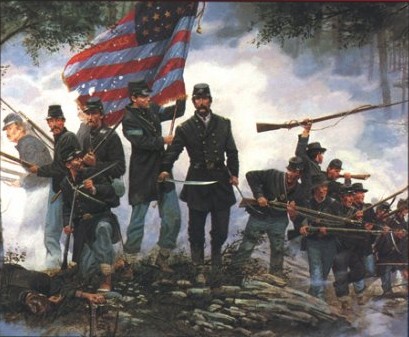
Chamberlain fully understood the criticality of his mission. If the Confederate forces were able to flank his position, they would gain the rear of the entire Union line with disastrous results… What Chamberlain could not have known, was that in the event of a significant Confederate victory during General Robert E. Lee’s invasion of Pennsylvania, the leaders of the Confederacy intended to present President Lincoln with an offer to pursue a negotiated peace, potentially dividing the Country permanently. [Nugent, “Joshua L. Chamberlain: a Biographical Essay,” Military History Online .3 Recounted by Pat Finegan, To the Limits of the Soul’s Ideal: My Tribute to Major General Joshua L. Chamberlain.
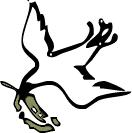
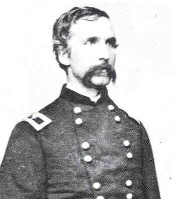
The enemy seemed to have gathered all their energies for their final assault. We had gotten our thin line into as good a shape as possible, when a strong force emerged from the scrub wood in the valley, as well as I could judge, in two lines in echelon by the right, and, opening a heavy fire, the first line came on as if they meant to sweep everything before them. We opened on them as well as we could with our scanty ammunition snatched from the field.It did not seem possible to withstand another shock like this now coming on. Our loss had been severe. One-half of my left wing had fallen, and a third of my regiment lay just behind us, dead or badly wounded. At this moment my anxiety was increased by a great roar of musketry in my rear, on the farther or northerly slope of Little Round Top, apparently on the flank of the regular brigade, which was in support of Hazlett's battery on the crest behind us. The bullets from this attack struck into my left rear, and I feared that the enemy might have nearly surrounded the Little Round Top, and only a desperate chance was left for us. My ammunition was soon exhausted. My men were firing their last shot and getting ready to “club” their muskets.It was imperative to strike before we were struck by this overwhelming force in a hand-to-hand fight, which we could not probably have withstood or survived. At that crisis, I ordered the bayonet. The word was enough. It ran like fire along the line, from man to man, and rose into a shout, with which they sprang forward upon the enemy, now not 30 yards away. The effect was surprising; many of the enemy's first line threw down their arms and surrendered. An officer fired his pistol at my head with one hand, while he handed me his sword with the other. Holding fast by our right, and swinging forward our left, we made an extended “right wheel,” before which the enemy's second line broke and fell back, fighting from tree to tree, many being captured, until we had swept the valley and cleared the front of nearly our entire brigade.
When I consider all that Gettysburg represents, the battle comes down to a few key lessons. But perhaps the most important occurred on the second day. Col. Joshua Chamberlain and his 20th Maine were the extreme flank of the Union Army, and as the afternoon sun of July 2 began to fade into evening, the 14th Alabama gathered itself for one last assault on the rear of the Little Round Top. If the 20th Maine gave way, the Confederates would literally have been in position to roll up the side.
Chamberlain's genius was manifested that day when he demonstrated a keen understanding of the moment – an understanding of such clarity that few will experience it in a lifetime. Faced with insurmountable odds, he could not stand and fight, for he would be overwhelmed, and he could not retreat, for that would expose the entire army's flank. So, he ordered 'fix bayonets' and swept a superior foe from the field, leading a charge, which became immortal. The lesson? Audacity and courage of conviction. Providence willing, none of us will face such a supreme moment. But, if we do, knowing the story of Little Round Top may just be the insight, the lesson, that pulls us through. We speak and write about core values, but these men left a legacy that transcends our poor attempts to verbalize and give meaning. A lesson in leadership to which we should all aspire.
In great deeds something abides. On great fields something stays. Forms change and pass; bodies disappear; but spirits linger, to consecrate ground for the vision-place of souls. And reverent men and women from afar, and generations that know us not and that we know not of, heart-drawn to see where and by whom great things were suffered and done for them, shall come to this deathless field, to ponder and dream; and lo! the shadow of a mighty presence shall wrap them in its bosom, and the power of the vision pass into their souls.